Possip
One text a week from every parent. Possip sold a human service, and the design work was the machine that let a small team produce the same weekly report, at the same quality, for every school.
- Client
- Possip, Nashville
- Role
- Design Lead, via Brickroad (US agency)
- Years
- 2017 to 2019
- Outcome
- Google for Startups Black Founders Fund, 2020
Schools hear from parents twice: at scheduled conferences, and when something has already gone wrong. Possip, founded by Shani Dowell in Nashville, answered with a deliberately small idea: one short text to every parent each week, answerable in under a minute, in the parent's own language. The name is short for positive gossip. It was never meant as a complaint box.
Behind that text sat the real product. Every week, every reply from every school had to be read, sorted, escalated where needed and turned into a report a principal could act on. The parent side stayed small on purpose. The design work went into the machine.
One comment at a time, with a counter
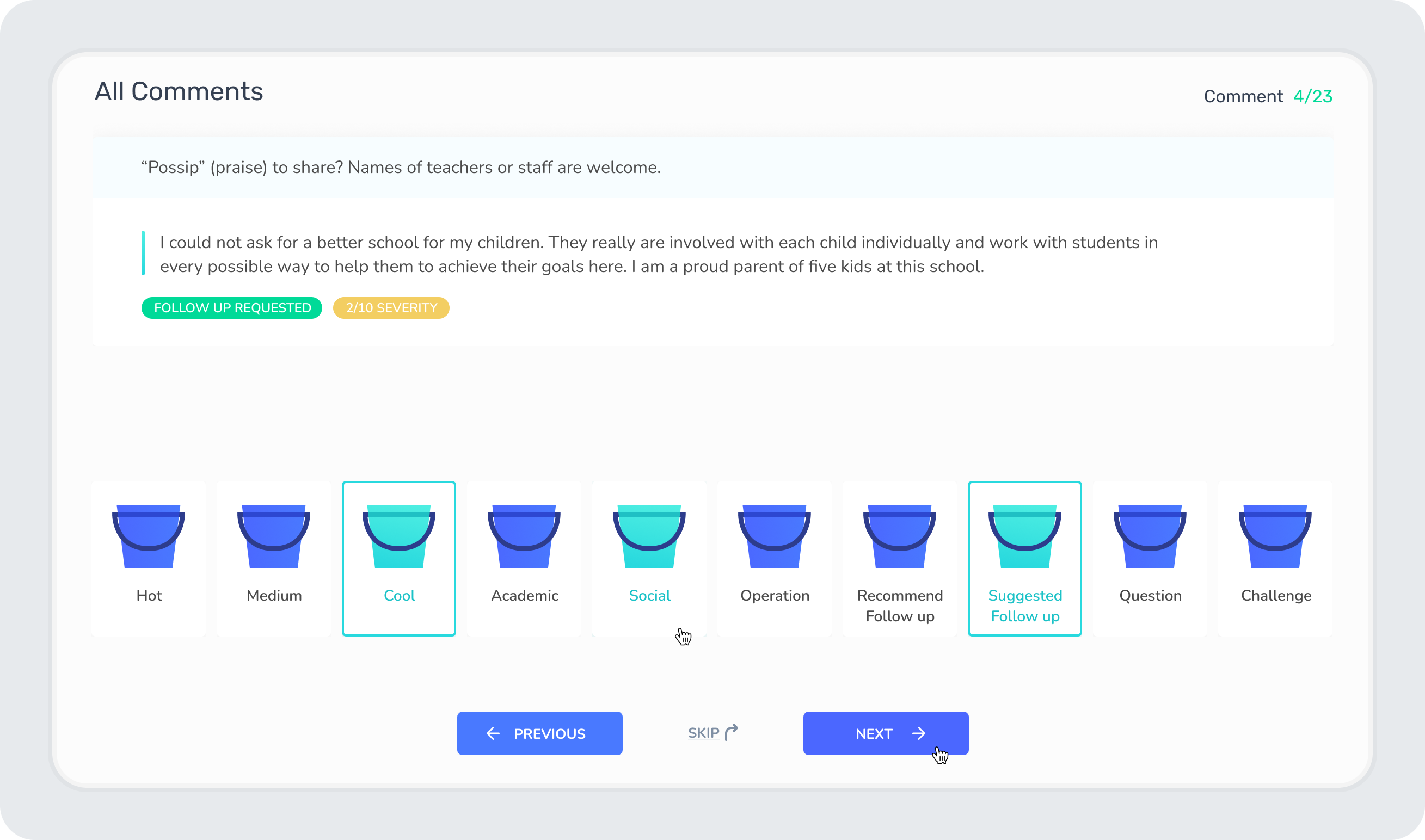
Comments are processed in a queue, with a position counter, a skip, and forward and back. Not a list, not an inbox. A list invites the reader to pick out the interesting comments and leave the rest, and the rest are where the operational problems live. A queue guarantees every comment is seen. The counter tells the reader how much of the week remains, which is what makes the work estimable, and skip lets a difficult comment wait instead of stopping the run.
Two scales that were never merged
Every comment carries two separate measures. The parent rates, from 1 to 10, how much the matter hurts: 1 to 3 is a minor irritation, 4 to 6 a real problem or a substantive suggestion, 7 to 10 something urgent that touches a child's safety. The reviewer sets how fast it has to be answered: Hot, Medium or Cool. Written tone does not track feeling. A parent can write sharply because of an unrelated morning, or describe bullying in calm, polite prose. So the system asks the only person who knows how much it hurt, and lets staff judge how fast the school must move. The two scales answer different questions for different people. Merging them would have destroyed both.
Beside the scales, the reviewer sorts on four axes rather than ten flat tags: when (Hot, Medium, Cool), who inside the school owns it (academic, social, operations), whether the parent should be contacted, and what kind of comment it is (a question or a challenge). Each axis answers a question a principal has to answer anyway, which is why one comment can sit on several at once without the sorting becoming vague.
Escalation rewrites, and carries the urgency forward
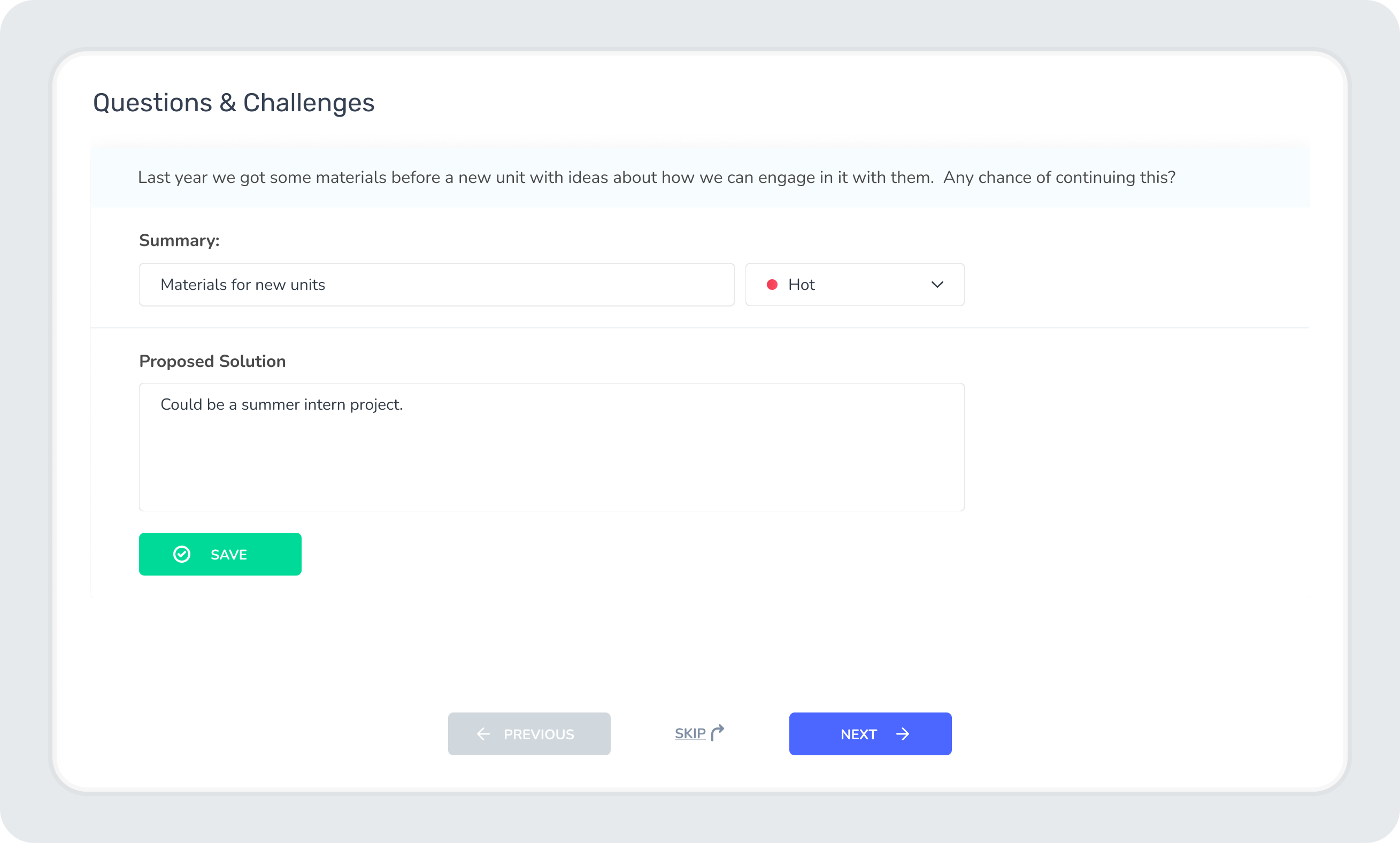
An escalated comment is not forwarded as it stands. It is restated: a short summary, a response level and a proposed solution. Parent wording is often repetitive or unclear, and the school is buying an answer, not a transcript. The only moment the context is free is while the original comment is still on screen, so the solution is written there. The urgency set in the queue arrives pre-filled and stays editable. A reviewer reading an angry message marks it Hot on first impression; by the time they have written a solution they usually know its real shape. Carrying the value forward saves a step, and keeping it editable makes the escalation the final check that urgency matches remedy.
The report is built from named sections
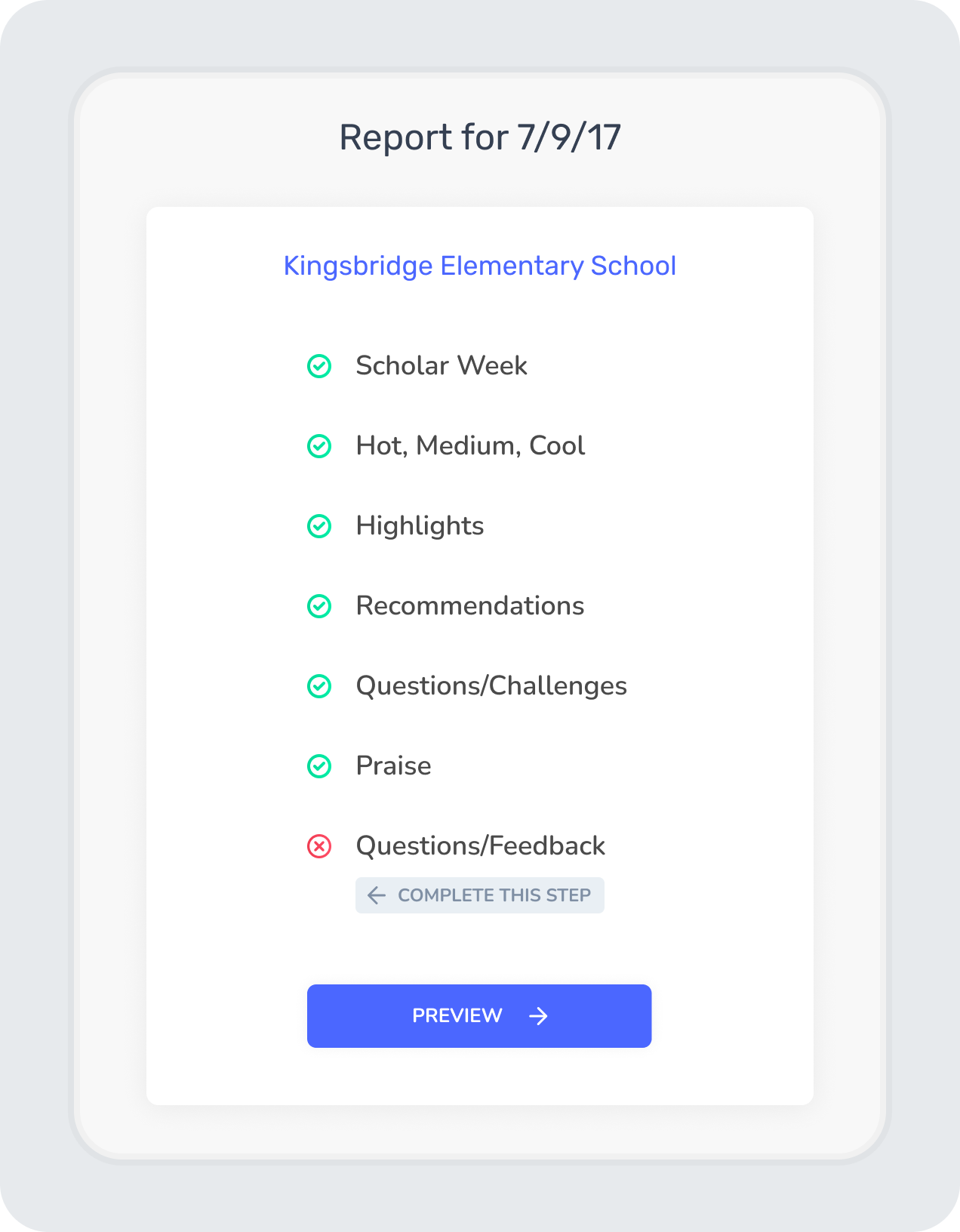
The weekly report is assembled from seven named sections rather than written as a document. Each is completed in its own step, and the state of every section is shown in one place before anything is published. Quality should not depend on who ran the week: same sections, same order, every school. The screen shows six sections passing, one marked incomplete, and a route straight back to the step that failed.
The district gets its own view
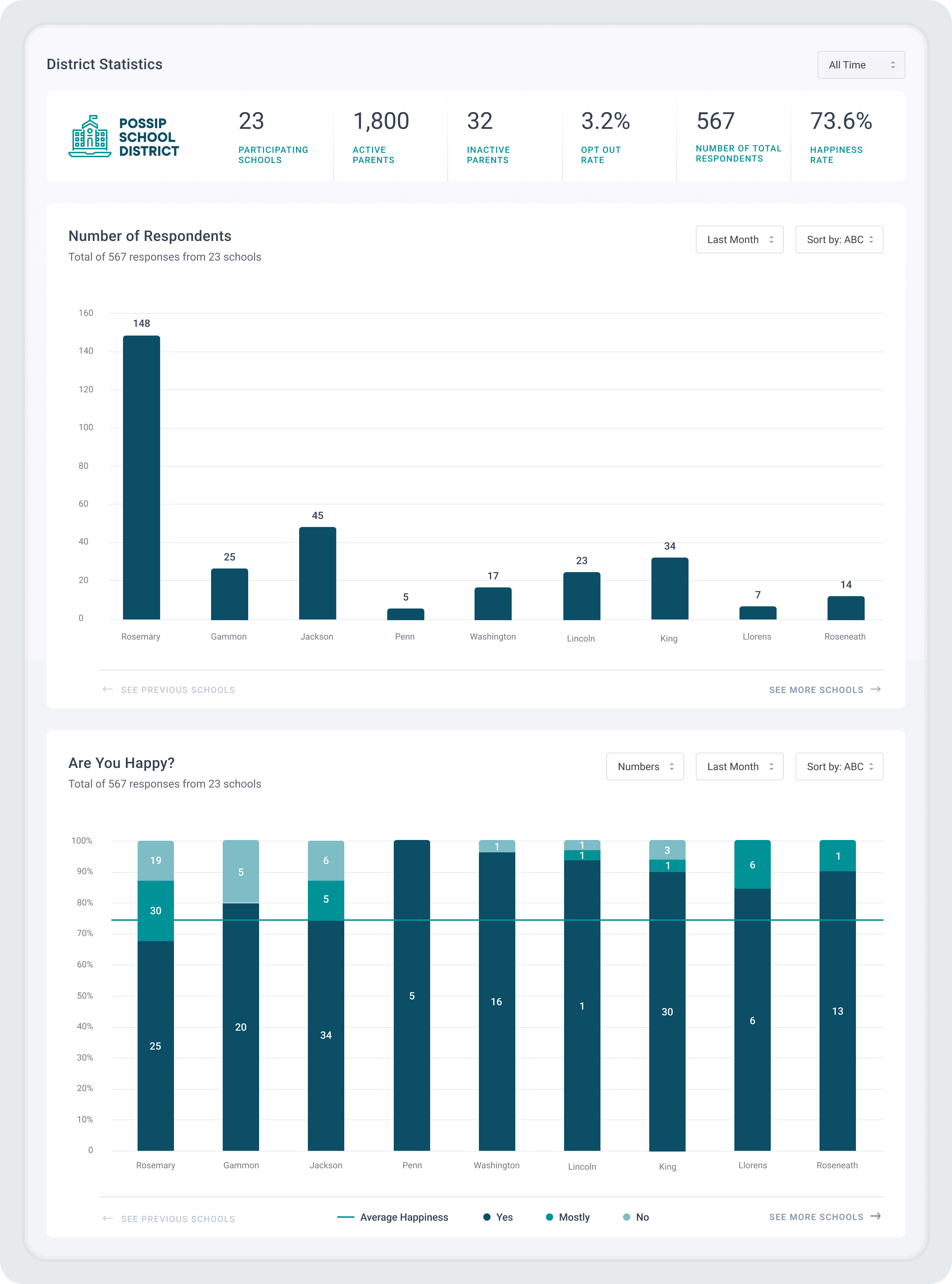
Administrators read an aggregate view: participation, opt-outs and the spread of parent sentiment per school, year over year. This is a third audience with a different question. A school asks what happened this week. A district asks which schools are moving, and whether to renew. Scaling the weekly report up would have answered neither.
The parent side was left thin on purpose
The parent surface stayed at one question over text message. No account, no app, no dashboard. Every element added to the parent side is a reason not to answer, and the whole product depends on parents answering. It carries exactly one deliberate input beyond the answer itself: the parent's own rating of how much the matter hurts. That input earns its place because nobody else in the system can supply it. Staff can judge urgency, ownership and category from the text. Only the parent can say how much it hurt.
What changed across the engagement
The work moved through three problems in order, and each one only became visible because the previous one had been solved.
The first year made the report possible at all: message delivery, contact import and report production. The unit of work was one report.
The sorting layer arrived once delivery worked and comments were coming in at volume. The four axes, the parent's rating and the escalation form exist so schools would not drown in raw comments. Scheduling and question choice moved out to the schools over the same stretch. The unit of work became one school's week.
The final year addressed the buyer: participation across schools, year-over-year comparison, exports and a measure of data quality. The unit of work became one district's year, and the question stopped being whether the report went out and became whether it was worth renewing.
How it was built
Possip is where the design system behind my later work started. The component set built here was carried into Productions.com, used there at first as it was, then rebuilt into a far more complete system, and developed further for the UNCF platforms. Designs age. Systems built on the right constraints keep working.
Outcome
In 2020 Possip was one of the startups selected for the inaugural cohort of the Google for Startups Black Founders Fund. Productions.com, the next platform I led design for, was selected in the same cohort.
Next case study